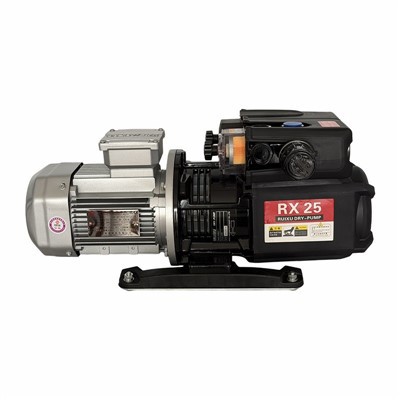
Can a Dual Stage Rotary Vane Vacuum Pump be used for gas sampling?
As a supplier of dual stage rotary vane vacuum pumps, I am often asked whether these pumps can be used for gas sampling. This question is not only relevant to the functionality of the pump but also to its applicability in various scientific and industrial settings. In this blog, I will delve into the capabilities of dual stage rotary vane vacuum pumps for gas sampling, exploring their advantages, limitations, and the key factors to consider.
Understanding Dual Stage Rotary Vane Vacuum Pumps
Before discussing their suitability for gas sampling, it is essential to understand how dual stage rotary vane vacuum pumps work. A dual stage rotary vane pump consists of two pumping stages connected in series. The first stage, also known as the roughing stage, is responsible for removing the majority of the gas from the system. The second stage, or the high - vacuum stage, further reduces the pressure to achieve a lower ultimate vacuum level.
The basic principle of operation involves a rotor with vanes that rotate inside a cylindrical chamber. As the rotor turns, the vanes slide in and out of slots in the rotor, creating chambers of varying volume. Gas is drawn into the chamber through an inlet port, compressed as the volume decreases, and then expelled through an outlet port.
Advantages of Using Dual Stage Rotary Vane Vacuum Pumps for Gas Sampling
- High Vacuum Capability
One of the significant advantages of dual stage rotary vane vacuum pumps is their ability to achieve a relatively high vacuum. This is crucial for gas sampling, especially when dealing with trace gas analysis. A lower pressure environment allows for more accurate sampling and analysis, as it reduces the interference from atmospheric gases. For example, in environmental monitoring, where detecting low - concentration pollutants is essential, a high - vacuum pump can help isolate the target gases more effectively. - Stable Performance
Dual stage pumps offer stable pumping performance over a wide range of pressures. This stability is important for gas sampling because it ensures a consistent flow rate and pressure during the sampling process. A stable flow rate is necessary to obtain representative gas samples, as any fluctuations in flow can lead to inaccurate results. - Versatility
These pumps can handle a variety of gases, including air, nitrogen, oxygen, and some non - corrosive industrial gases. This versatility makes them suitable for a wide range of gas sampling applications, from laboratory research to industrial process monitoring.
Limitations of Dual Stage Rotary Vane Vacuum Pumps for Gas Sampling
- Contamination Risk
Rotary vane pumps use oil as a lubricant and sealant. This oil can potentially contaminate the gas sample, especially if the pump is not properly maintained. In applications where pure gas samples are required, such as in semiconductor manufacturing or high - precision analytical chemistry, this contamination can be a significant drawback. - Sensitivity to Particulates
The internal components of a rotary vane pump are sensitive to particulates in the gas stream. If the gas being sampled contains dust, debris, or other solid particles, these can damage the vanes and other moving parts of the pump, leading to reduced performance and increased maintenance requirements. - Limited Compatibility with Corrosive Gases
While dual stage rotary vane pumps can handle some non - corrosive gases, they are not suitable for sampling highly corrosive gases. Corrosive gases can react with the pump's internal components, such as the vanes and the pump housing, causing damage and reducing the pump's lifespan.
Key Factors to Consider When Using Dual Stage Rotary Vane Vacuum Pumps for Gas Sampling
- Gas Composition
Before using a dual stage rotary vane vacuum pump for gas sampling, it is crucial to understand the composition of the gas. If the gas contains corrosive or reactive components, additional precautions may be necessary, such as using a gas filter or a corrosion - resistant pump. - Sampling Rate
The sampling rate, or the flow rate of the gas being sampled, is an important consideration. The pump should be able to provide a sufficient flow rate to collect an adequate amount of gas within a reasonable time frame. However, an excessively high flow rate can also cause problems, such as increased turbulence and potential contamination. - Pump Maintenance
Regular maintenance is essential to ensure the proper functioning of the pump and to minimize the risk of contamination. This includes changing the oil, cleaning the pump, and inspecting the vanes and other components for wear and tear.
Comparison with Other Types of Vacuum Pumps
- Single Stage Rotary Vane Vacuum Pump
A Single Stage Rotary Vane Vacuum Pump is simpler in design and generally less expensive than a dual stage pump. However, it can only achieve a lower vacuum level compared to a dual stage pump. For gas sampling applications that require a high vacuum, a dual stage pump is often a better choice. - Free Air Displacement Vacuum Pump
A Free Air Displacement Vacuum Pump is typically used for applications that require a high flow rate at relatively low vacuum levels. While it may be suitable for some gas sampling applications, it may not be able to achieve the high vacuum levels required for certain types of gas analysis. - Vacuum Pump Industrial Use
In industrial settings, Vacuum Pump Industrial Use often involves handling large volumes of gas and requires pumps with high reliability and durability. Dual stage rotary vane pumps can be a good option for industrial gas sampling, provided that the gas composition and other operating conditions are carefully considered.
Conclusion
In conclusion, a dual stage rotary vane vacuum pump can be used for gas sampling in many applications. Its high vacuum capability, stable performance, and versatility make it a suitable choice for a wide range of gas sampling needs. However, it is important to be aware of its limitations, such as the risk of contamination and sensitivity to particulates and corrosive gases. By carefully considering the gas composition, sampling rate, and pump maintenance, users can effectively utilize dual stage rotary vane vacuum pumps for accurate and reliable gas sampling.


If you are interested in using a dual stage rotary vane vacuum pump for your gas sampling needs, I encourage you to contact me for further discussion and to explore the best solutions for your specific requirements. We are committed to providing high - quality vacuum pumps and excellent customer service to meet your industrial and scientific needs.
References
- "Vacuum Technology: A Practical Guide for Scientists and Engineers" by O'Hanlon, John F.
- "Handbook of Vacuum Physics" edited by Dushman, Saul.