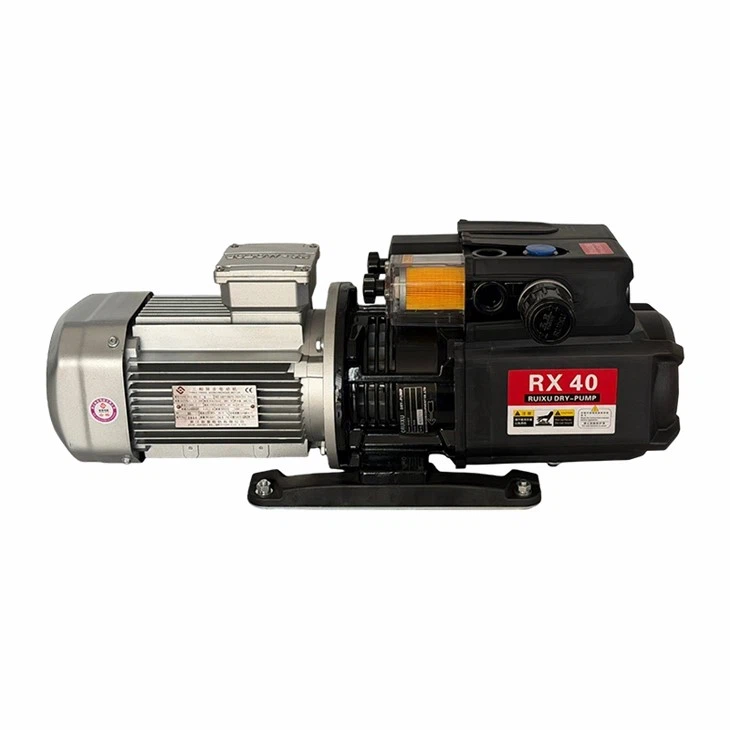
The Three Magical Elements of a Vacuum Pump
A small vacuum pump acts like a miniature air transporter, relying on three key components to accomplish its gas-extraction mission:
The Power Heart: An electric motor drives an eccentric wheel to rotate, generating mechanical energy.
The Valve Commander: A spring-loaded reed valve controls the unidirectional flow of gas, preventing backflow.
The Chamber Stage: The internal volume changes cyclically-expanding to draw in and store gas during the intake phase, and contracting to expel it during the compression phase.
A Step-by-Step Breakdown of the Working Principle
Its operational process is akin to drawing liquid into a syringe:
Intake Phase: The chamber expands to create negative pressure; the intake valve opens, drawing in gas.
Isolation Phase: The valves close, creating a sealed internal space.
Exhaust Phase: The chamber compresses, pushing the gas forward; the exhaust valve opens to expel the medium.
Continuous Cycle: This cycle repeats dozens of times per second, gradually reducing the gas pressure within the connected container.
III. Comparison of Common Vacuum Pump Types
Vacuum pumps with different structural designs each excel in specific application areas:
Rotary Vane Pumps: Quiet and durable; ideal for laboratory equipment.
Diaphragm Pumps: Oil-free operation; well-suited for medical instruments.
Piston Pumps: High pumping speed; frequently used in packaging machinery.
Scroll Pumps: High energy efficiency; widely utilized in precision electronics.