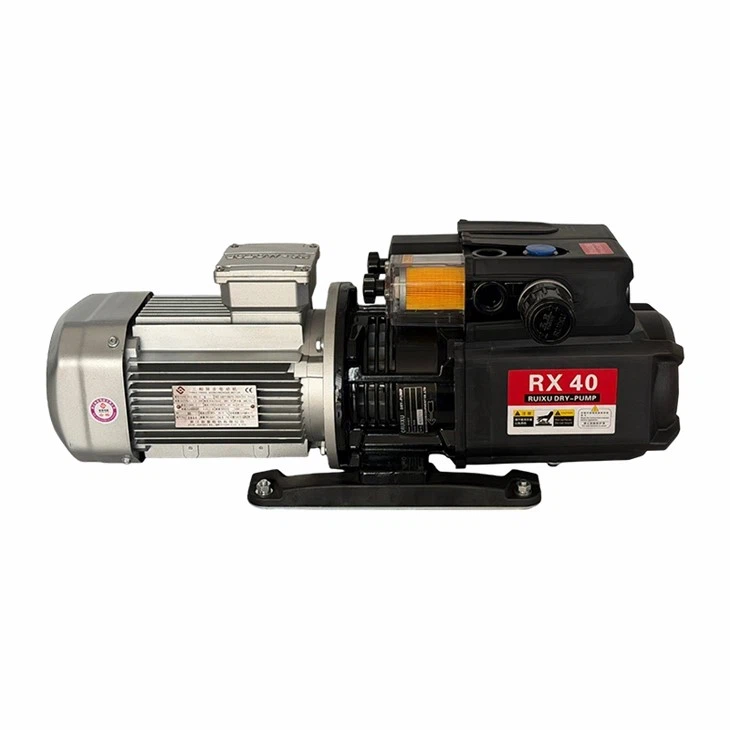
If a dry vacuum pump were likened to the human body, its rotor system would be its "heart." This core component consists of two precisely machined rotors that, much like a pair of perfectly synchronized dance partners, rotate in opposite directions within the pump chamber. The shape of these rotors is meticulously optimized; common configurations include the claw, screw, and Roots types, each offering distinct advantages:
Claw-type rotors: Simple in structure and well-suited for evacuating gases containing particulate matter.
Screw-type rotors: Feature excellent sealing capabilities, enabling the achievement of high vacuum levels.
Roots-type rotors: Characterized by rapid pumping speeds, making them ideal for applications requiring quick gas evacuation. The surfaces of the rotors typically undergo special treatments to enhance hardness and wear resistance, thereby ensuring leak-free operation over extended periods. A micron-level clearance is maintained between the two rotors; this spacing simultaneously prevents contact friction while enabling the effective compression of gases.
Another defining characteristic of the dry vacuum pump is its completely oil-free design-a feat made possible by its sophisticated sealing system. This sealing system acts as a "protective shield," preventing external air and lubricating oil from entering the pump chamber while simultaneously preventing the leakage of gases from within the pump.
Common sealing methods include:
Mechanical seals: Employing springs and friction pairs to achieve dynamic sealing.
Labyrinth seals: Utilizing intricate channels to increase resistance against gas leakage.
Ferrofluid seals: Harnessing magnetic fluids to form a liquid sealing ring. Advanced models often incorporate a combination of multi-stage sealing techniques, establishing multiple layers of protection at critical points-such as the rotor shaft ends and pump chamber interfaces-to ensure that the vacuum environment remains pure and free from contamination.
The Cooling System: A "Heat-Dissipation Marvel"
High-speed rotation generates a significant amount of heat within the rotors; without effective cooling, the pump body's temperature would rise rapidly, potentially compromising performance or even damaging internal components. The dry vacuum pump's cooling system functions as a "heat-dissipation marvel," typically employing one of two methods:
Air cooling: Utilizes heat sinks and fans to facilitate forced-convection heat dissipation, making it suitable for small to medium-sized pumps.
Water cooling: Circulates a cooling fluid to carry away heat, a method best suited for large, high-power pumps. Some models feature integrated cooling channels within the rotors themselves, allowing the cooling fluid to flow directly through the heat-generating zones for even more efficient temperature regulation. An exceptional cooling system ensures that the pump maintains a stable operating temperature during continuous operation, thereby extending its overall service life.