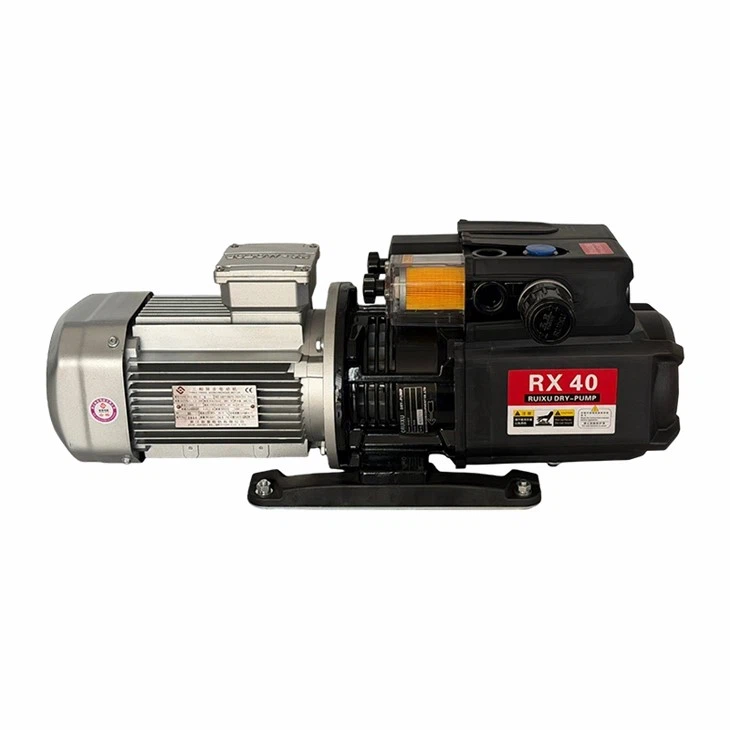
The Core Mission of Filters
A vacuum pump filter acts like a protective mask for precision instruments; its primary mission is to intercept three types of "adversaries":
Solid Particles: Metal shavings, dust, and similar debris that can scratch the interior surfaces of the pump body.
Liquid Aerosols: Oil mist and water vapor that may lead to lubrication failure.
Chemical Corrosives: Acidic gases or solvent vapors that can erode internal components.
Modern multi-layer composite filter media achieve a 99.9% retention rate for particles as small as 0.3 microns-equivalent to establishing a defensive barrier at a scale just 1/200th the thickness of a human hair.
The Design Philosophy of Airflow Labyrinths
An intelligent filter never relies on brute force; instead, it employs clever airflow maneuvers:
Centrifugal Separation Layer: Induces a spiral motion in the airflow, utilizing inertia to fling out larger particles.
Fiber Interception Layer: A three-dimensional capture net woven from ultra-fine glass fibers.
Adsorption Functional Layer: Utilizes activated carbon or molecular sieves to neutralize gaseous contaminants.
A "communicative" filter provides the following cues to alert you that it is time to take action:
Indicator Window Discoloration: A white indicator changes to red, signaling that the filter is saturated.
Differential Pressure Alarm: If the pressure difference between the inlet and outlet exceeds twice the initial baseline value, replacement is required.
Performance Degradation: A 10% drop in pumping speed indicates that the filter unit should be inspected.