


When it comes to industrial and scientific applications, the cost of a vacuum pump without oil is a crucial factor for many businesses and researchers. As a supplier of Vacuum Pump Without Oil, I understand the importance of providing clear and accurate information about the pricing of these essential devices. In this blog post, I will delve into the factors that influence the cost of oil - free vacuum pumps and provide a general overview of the price ranges you can expect.
Factors Affecting the Cost of Oil - Free Vacuum Pumps
1. Pump Type and Technology
There are several types of oil - free vacuum pumps available in the market, each with its own unique technology and performance characteristics. For example, the Oil Less Rotary Vane Vacuum Pump uses a rotary vane mechanism to create a vacuum. These pumps are known for their relatively simple design and are suitable for a wide range of applications. On the other hand, the Oil Free Rotary Vane Vacuum Pump may offer enhanced performance and durability, which can affect the price.
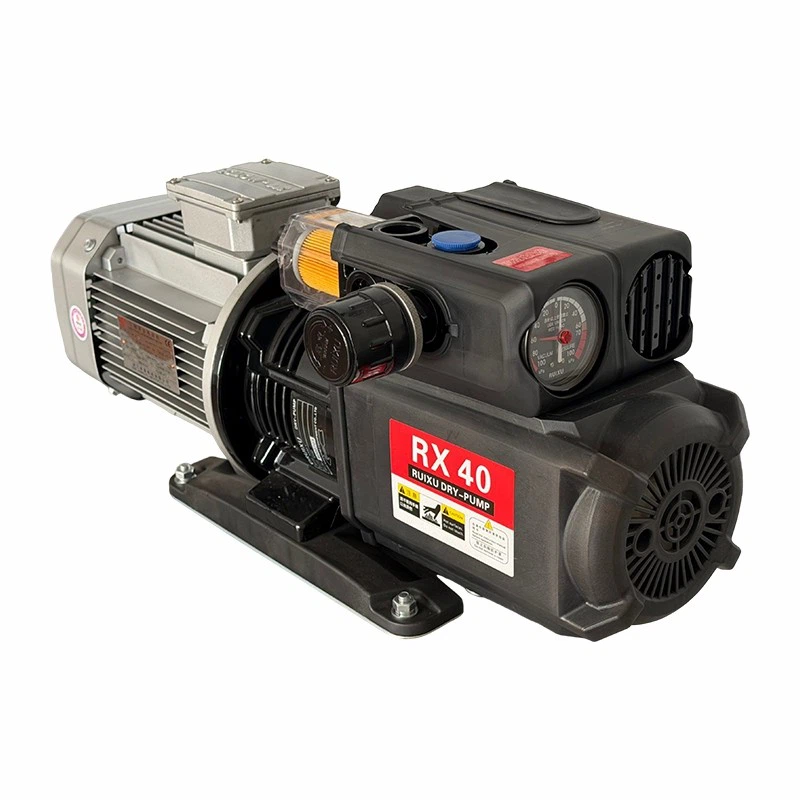

The Nve Vacuum Pump is another type that utilizes advanced technology to achieve high - quality vacuum levels. Pumps with more advanced technology often come with a higher price tag due to the research, development, and manufacturing costs associated with them.
2. Pump Capacity
The capacity of a vacuum pump, measured in terms of pumping speed (usually in liters per second or cubic feet per minute), is a significant determinant of its cost. Higher - capacity pumps can evacuate air more quickly, which is essential for applications that require rapid vacuum generation. For instance, in large - scale industrial processes or high - throughput scientific experiments, a pump with a high pumping speed is necessary. However, these high - capacity pumps are generally more expensive than their lower - capacity counterparts.
3. Build Quality and Materials
The quality of the materials used in the construction of the vacuum pump and its overall build quality also play a role in determining the cost. Pumps made from high - grade materials such as stainless steel or other corrosion - resistant alloys are more durable and can withstand harsh operating conditions. They are also less likely to break down, reducing the need for frequent repairs and replacements. As a result, pumps with better build quality and materials tend to be more expensive.
4. Brand and Reputation
Well - established brands with a good reputation in the market often charge a premium for their products. These brands have a track record of producing reliable and high - performance vacuum pumps. Customers are willing to pay more for the peace of mind that comes with purchasing from a trusted brand. Additionally, brands may offer better customer support, warranty, and after - sales service, which can add to the overall cost.
Price Ranges of Oil - Free Vacuum Pumps
The cost of oil - free vacuum pumps can vary widely depending on the factors mentioned above. Generally, small - scale, low - capacity oil - free vacuum pumps can start at around $200 - $500. These pumps are suitable for basic laboratory applications or small - scale industrial processes where the vacuum requirements are not extremely high.
Mid - range oil - free vacuum pumps, with moderate pumping speeds and better build quality, typically cost between $500 - $2000. These pumps are often used in a variety of industrial and scientific applications, such as vacuum packaging, semiconductor manufacturing, and some types of chemical processing.
High - end oil - free vacuum pumps, which offer high pumping speeds, advanced technology, and excellent build quality, can cost upwards of $2000. These pumps are used in critical applications where a high - quality vacuum is required, such as in high - end research laboratories, aerospace manufacturing, and some specialized industrial processes.
Value for Money
When considering the cost of an oil - free vacuum pump, it's important to look beyond the initial purchase price. A more expensive pump may offer better performance, longer lifespan, and lower maintenance costs over time. For example, a high - quality pump may require fewer repairs and replacements, saving you money in the long run.
It's also important to consider the specific requirements of your application. If you need a pump for a short - term or low - intensity project, a lower - cost pump may be sufficient. However, for long - term, high - demand applications, investing in a more expensive, high - quality pump is likely to be a better choice.
Contact for Purchase and Negotiation
If you are interested in purchasing an oil - free vacuum pump, I encourage you to reach out to discuss your specific needs. As a supplier, I can provide detailed information about our product range, pricing, and any available discounts. We understand that every customer has unique requirements, and we are committed to providing the best solution at a competitive price. Whether you need a small - scale pump for a laboratory or a high - capacity pump for an industrial process, we have the expertise and products to meet your needs.
References
- "Vacuum Technology Handbook" by Peter M. A. Sherwood
- "Industrial Vacuum Pumps: Principles, Design, and Operation" by F. O. Goodman


