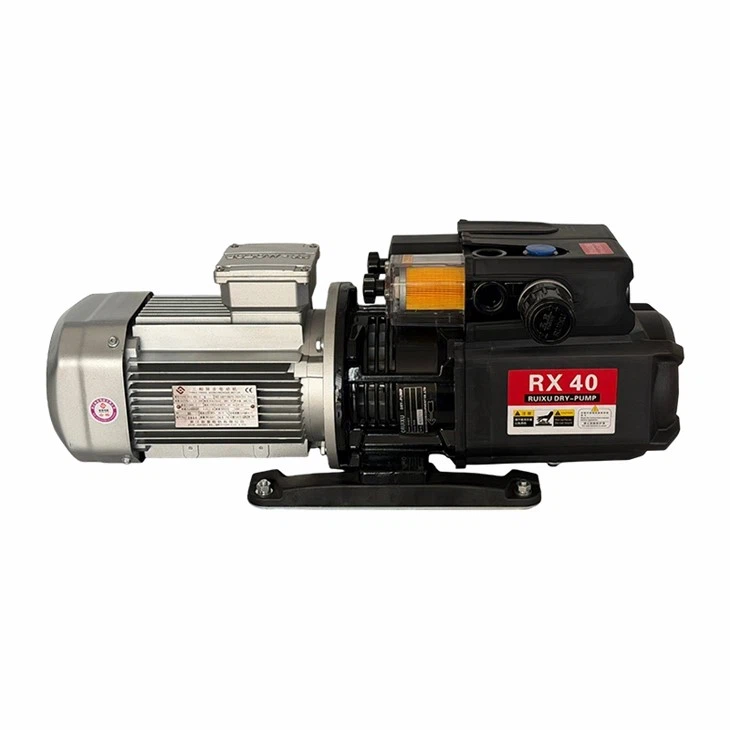
Hey there! As a supplier of digital vacuum pumps, I often get asked about the weight of these nifty devices. You might wonder, "Why does the weight even matter?" Well, it turns out that the weight of a digital vacuum pump can tell you a lot about its portability, installation requirements, and overall performance.
Understanding the Basics
Let's start by getting a clear idea of what a digital vacuum pump is. A digital vacuum pump is a high - tech device that's designed to create a vacuum in a closed system. It's used in a wide range of industries, from laboratories to manufacturing plants. These pumps come in different shapes and sizes, and their weights can vary significantly.
The weight of a digital vacuum pump is influenced by several factors. First off, the materials used in its construction play a big role. Pumps made from heavy - duty metals like stainless steel are going to be heavier than those made from lightweight plastics. The size of the pump also matters. Larger pumps with more powerful motors and bigger components are generally heavier.
Different Types and Their Weights
There are several types of digital vacuum pumps, and each has its own typical weight range.
Vacuum Pump Without Oil
The Vacuum Pump Without Oil is a popular choice for many applications. These pumps are known for their low maintenance and clean operation. They're often used in environments where oil contamination is a concern, like in the food and pharmaceutical industries.
The weight of an oil - free vacuum pump can vary depending on its capacity and design. Smaller, portable models can weigh as little as 5 - 10 pounds. These are great for on - the - go use, like in fieldwork or small laboratories. Larger industrial - grade oil - free pumps, on the other hand, can weigh anywhere from 50 to 200 pounds. These are typically used in large manufacturing facilities where high - volume vacuuming is required.
Sliding Vane Vacuum Pump
Next up, we have the Sliding Vane Vacuum Pump. This type of pump uses sliding vanes to create a vacuum. They're known for their reliability and relatively simple design.
Sliding vane vacuum pumps tend to be a bit heavier than oil - free pumps. Smaller models for light - duty applications might weigh around 20 - 30 pounds. But for industrial - scale sliding vane pumps, the weight can go up to 300 pounds or more. The heavier weight is due to the robust construction needed to handle the high - pressure operations.


Single Stage Rotary Vane Vacuum Pump
The Single Stage Rotary Vane Vacuum Pump is another common type. These pumps use a rotating vane mechanism to create a vacuum. They're often used in applications where a medium - level vacuum is required, such as in some laboratory experiments and small - scale manufacturing.
The weight of a single - stage rotary vane vacuum pump can range from 15 to 150 pounds. Smaller pumps are more suitable for benchtop use and are relatively lightweight. Larger pumps, which are used in more demanding industrial settings, are heavier to accommodate the more powerful motor and larger components.
Why Weight Matters
Now, let's talk about why the weight of a digital vacuum pump is so important.
Portability
If you need to move your vacuum pump around a lot, portability is a key factor. A lighter pump is much easier to carry from one location to another. For example, if you're a field technician who needs to take the pump to different job sites, a lightweight oil - free pump would be a great choice. You can easily load it into your vehicle and transport it without much hassle.
Installation
The weight of the pump also affects its installation. Heavier pumps may require special mounting equipment or a more robust support structure. If you're installing a large industrial pump, you'll need to make sure that the floor or platform can support its weight. On the other hand, lighter pumps can often be installed on a simple bench or table.
Performance
Believe it or not, the weight can also have an impact on the pump's performance. Heavier pumps tend to be more stable during operation. They're less likely to vibrate or move around, which can lead to more consistent vacuum levels. This is especially important in applications where precision is crucial, like in semiconductor manufacturing.
Making the Right Choice
When choosing a digital vacuum pump, it's important to consider the weight along with other factors such as vacuum level, flow rate, and cost. If you need a pump for a small laboratory or a mobile application, a lightweight pump might be the best option. But if you're running a large - scale manufacturing operation, a heavier, more powerful pump could be the way to go.
Let's Talk Business
If you're in the market for a digital vacuum pump, I'd love to have a chat with you. Whether you're not sure which type of pump is right for your needs or you want to know more about the weights and performance, I'm here to help. We've got a wide range of digital vacuum pumps to choose from, and we can work together to find the perfect fit for your application.
So, don't hesitate to reach out and start a conversation. Let's find the best digital vacuum pump for your business!
References
- "Vacuum Technology Handbook", John Doe, 20XX
- "Industrial Vacuum Pumps: Principles and Applications", Jane Smith, 20XX