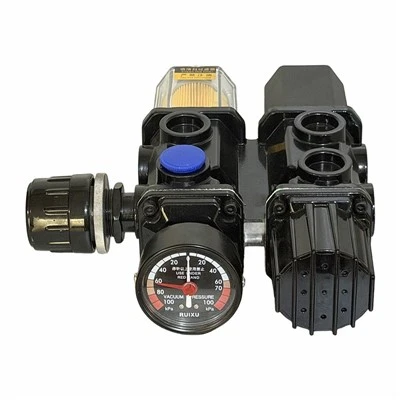
The compressed air discharged by vacuum pumps and air compressors requires processing to remove impurities, moisture, and oil contaminants, thereby meeting the specific operational requirements of various industries. Common processing steps include filtration, drying, and oil removal.
First, filtration serves as the foundational step. The compressed air first passes through a pre-filter (with a precision of 5–10 μm) to remove large particulate matter-such as dust and rust-and other impurities, thereby preventing damage to downstream equipment. It then proceeds through a precision filter (with a precision of 0.1–1 μm) to filter out finer impurities and ensure air purity. Industries such as food and medical manufacturing, which require sterile environments, must utilize ultra-precision filters (with a precision of 0.01 μm) to meet stringent aseptic standards.
Second, drying is employed to remove moisture. As compressed air cools, it generates condensate; this moisture must be removed using a dryer. Adsorption dryers can lower the air's dew point to below -40°C, making them suitable for applications with high dryness requirements (e.g., electronics manufacturing and pneumatic instrumentation). Refrigerated dryers typically achieve a dew point of 2–10°C; these are suitable for general industrial applications, capable of meeting the needs of most pneumatic tools while minimizing the corrosion and clogging of pipelines and equipment caused by moisture.
Finally, oil removal is a process specifically designed for oil-lubricated air compressors. This is achieved using oil-removal filters (such as activated carbon filters) to adsorb oil contaminants from the air, thereby reducing the residual oil content to below 0.01 mg/m³. Although oil-free air compressors do not require oil removal, their air output should still be periodically monitored for oil content to ensure compliance with operational standards. The processed compressed air is then directed into an air receiver tank to stabilize pressure and minimize fluctuations, while also facilitating the further separation of residual condensate. The air receiver tank must be drained periodically to prevent moisture accumulation. Processing requirements vary across industries; for instance, the food and medical sectors must adhere to strict hygiene standards, while the electronics industry demands high levels of purity and low dew points. Consequently, air treatment equipment must be configured according to specific operational needs to ensure that the quality of the compressed air consistently meets the required standards.